Postpartum Perineal Care Explained
What Is the Perineum and Why Does It Need Special Care?
The perineum is the area between the vagina and the anus. During a vaginal birth, this tissue stretches significantly and may tear or be cut (episiotomy). Even without tearing, the area is bruised, swollen, and sensitive for days to weeks after delivery.
Proper perineal care helps reduce pain, prevent infection, and support healing — and it's something every new mum should know about before giving birth.
The First 24–48 Hours: Immediate Relief
In the hospital, the priority is keeping the area clean and reducing swelling. Here's what midwives typically recommend:
1. Use a Peri Bottle Every Time You Use the Toilet
Wiping with toilet paper is painful and can disturb stitches. Instead, fill a peri bottle with warm water and gently rinse front to back while you urinate. This reduces stinging dramatically and keeps the area clean.
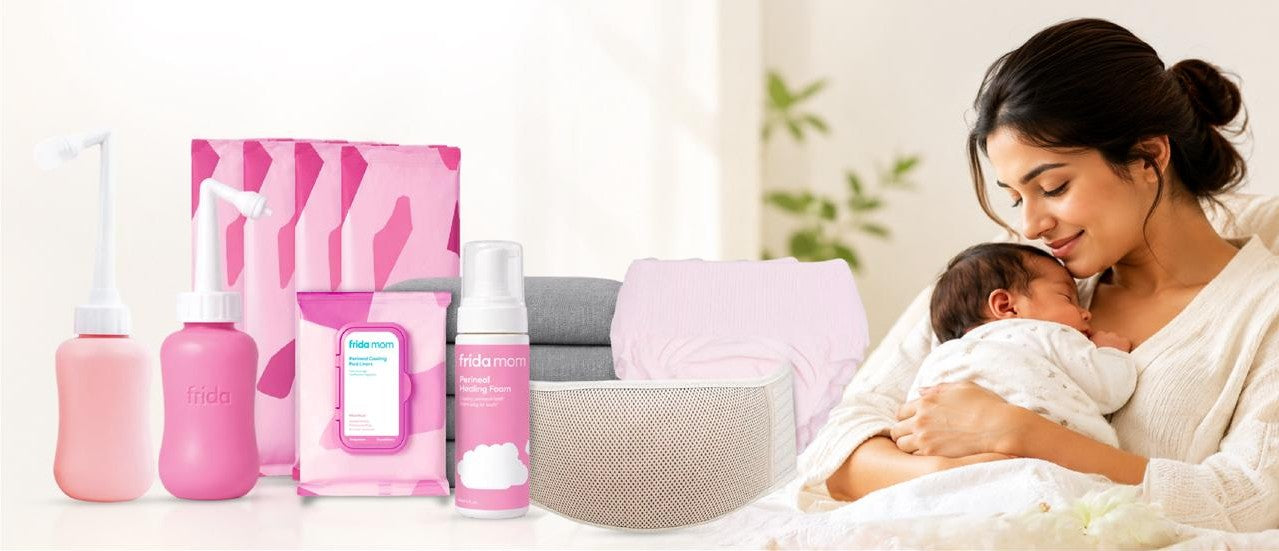
- Frida Mom Upside-Down Peri Bottle — the inverted design and angled nozzle let you rinse without awkward positioning. A top choice among new mums.
- Partum Panties Peri Bottle (300ml) — BPA-free and leak-proof with a precision angled nozzle, easy to use one-handed.
2. Ice Packs and Cooling Pads
Cold reduces swelling and numbs pain in the first 24 hours. The Frida Mom Postpartum Recovery Essentials Kit includes ice maxi pads and cooling witch hazel pad liners that you can layer for maximum relief.
3. Perineal Healing Foam
A witch hazel–based foam applied directly to the pad (not the skin) soothes irritation and supports healing. The Partum Panties Peri Soothe Foam combines witch hazel with ginger and rosemary for a natural anti-inflammatory effect.
Days 3–7: Managing Ongoing Discomfort
Swelling starts to ease, but stitches may feel tight and itchy as they heal. Keep up the peri bottle routine and sitz baths can now help.
Sitz Baths
A sitz bath involves sitting in a few inches of warm water for 10–20 minutes, 2–3 times a day. You can do this in the bathtub or use a sitz bath basin that fits over the toilet. Plain warm water is fine; some midwives recommend adding a small amount of sea salt.
Postpartum Underwear That Doesn't Rub
Tight elastic can dig into stitches and cause real discomfort. High-waisted, soft disposable underwear sits gently over the perineum without pressure:
- Frida Mom Disposable Postpartum Underwear — soft boyshort style that won't press on healing tissue.
- Partum Panties Maternity Disposable Underwear — ultra-soft, absorbent, and high-waisted for gentle coverage.
When to See a Doctor
Most perineal soreness improves within 1–2 weeks. See your midwife or GP if you notice:
- Increasing pain (rather than improving)
- Redness, swelling, or discharge with a bad smell (signs of infection)
- Difficulty urinating or emptying your bowels
- Stitches that seem to have opened or haven't dissolved after several weeks
What About C-Section Recovery?
If you had a C-section, the perineum itself won't need the same care — but your incision site does. High-waisted underwear is still essential to avoid the waistband rubbing the wound. See our guide on C-section recovery essentials for more.
Building Your Perineal Care Kit
Everything you need in one place: browse the full Postpartum Recovery collection to build your kit before baby arrives. The sooner you prepare, the less you'll have to think about it after.
The Bottom Line
Perineal care doesn't need to be complicated. Warm water, a good peri bottle, a soothing foam, and the right underwear will carry you through the hardest days. Your body has done something extraordinary — give it the care it deserves.
-
Posted in
fourth trimester, new mom, perineal care, postpartum, recovery